

Bar/Bat Mitzvah Outfitting Services
Expert bar mitzvah attire and outfitting services for over 50 years. Ensure the perfect fit and style for this most special occasion.
When it comes to achieving the perfect fit and stress-free men’s wedding attire coordination, our team at Family Britches has spent over 50 years providing hands-on wedding outfitting services that remove all the guesswork and guarantee stunning results for your big day.
Our process begins with detailed consultations that can occur in-store, virtually, or through convenient at-home visits. During these sessions, our expert stylists discuss your wedding’s specific requirements including date, venue, formality level, and personal style preferences.
Our team guides you through fabric selections and color palettes that perfectly complement your wedding theme and season. Our extensive collection includes options from premium manufacturers worldwide, ensuring you’ll find exactly the right materials for your vision.
For grooms with groomsmen scattered across the country, we can coordinate group fittings remotely. We have successfully managed weddings where the groom lived out of state while groomsmen resided across multiple time zones, using virtual measurements, shipped try-on kits, and video consultations.
At Family Britches, our comprehensive outfitting services cater to every male participant in your wedding celebration. Whether you’re the groom, part of the wedding party, or a guest, we ensure you look your absolute best with perfectly coordinated and stylish attire.
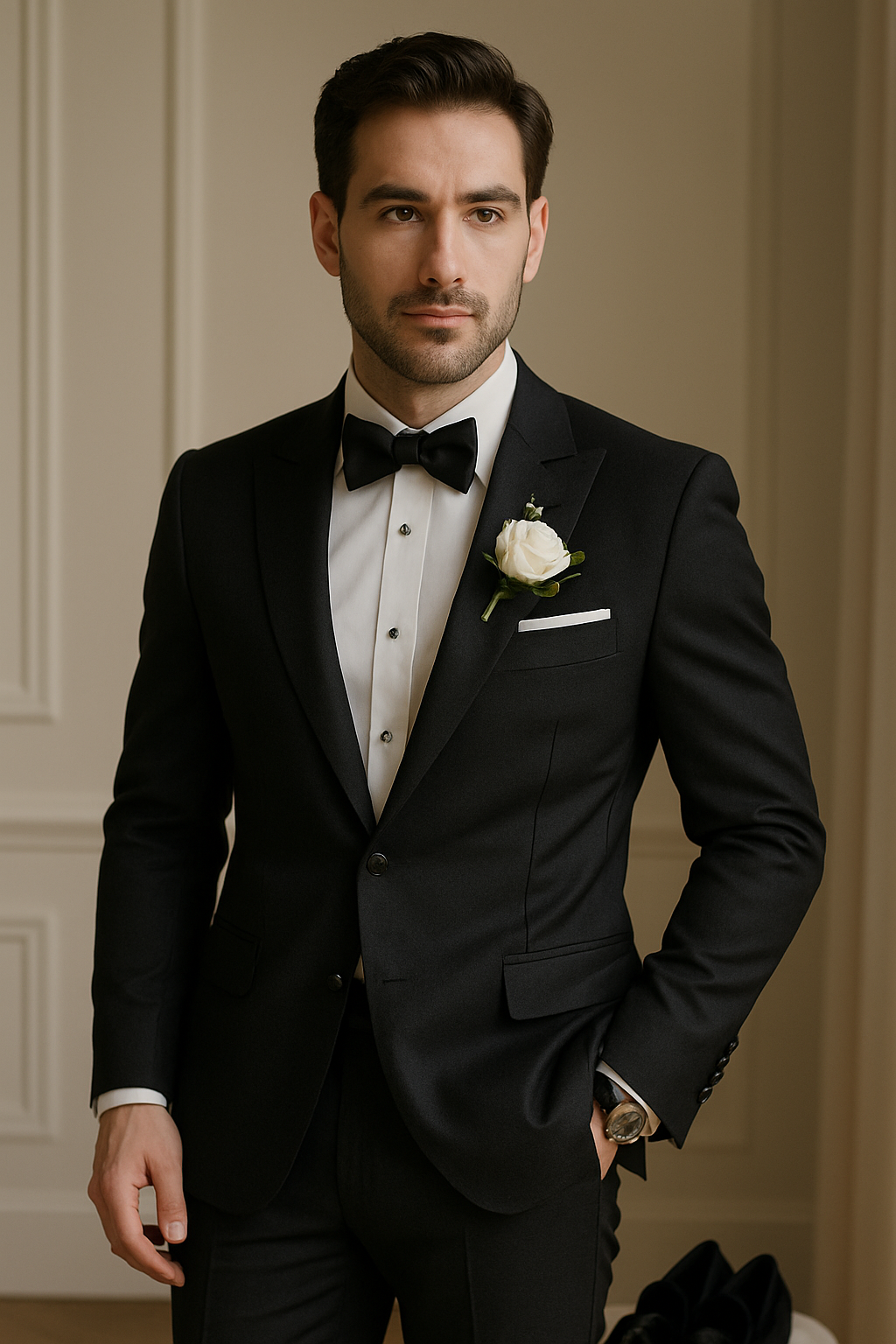
As the central figure of the wedding day, the groom deserves special attention. We offer personalized consultations and custom tailoring to create a look that reflects your personal style while complementing the wedding theme. From selecting the ideal tuxedo or suit to coordinating accessories, we help you stand out with confidence and elegance.
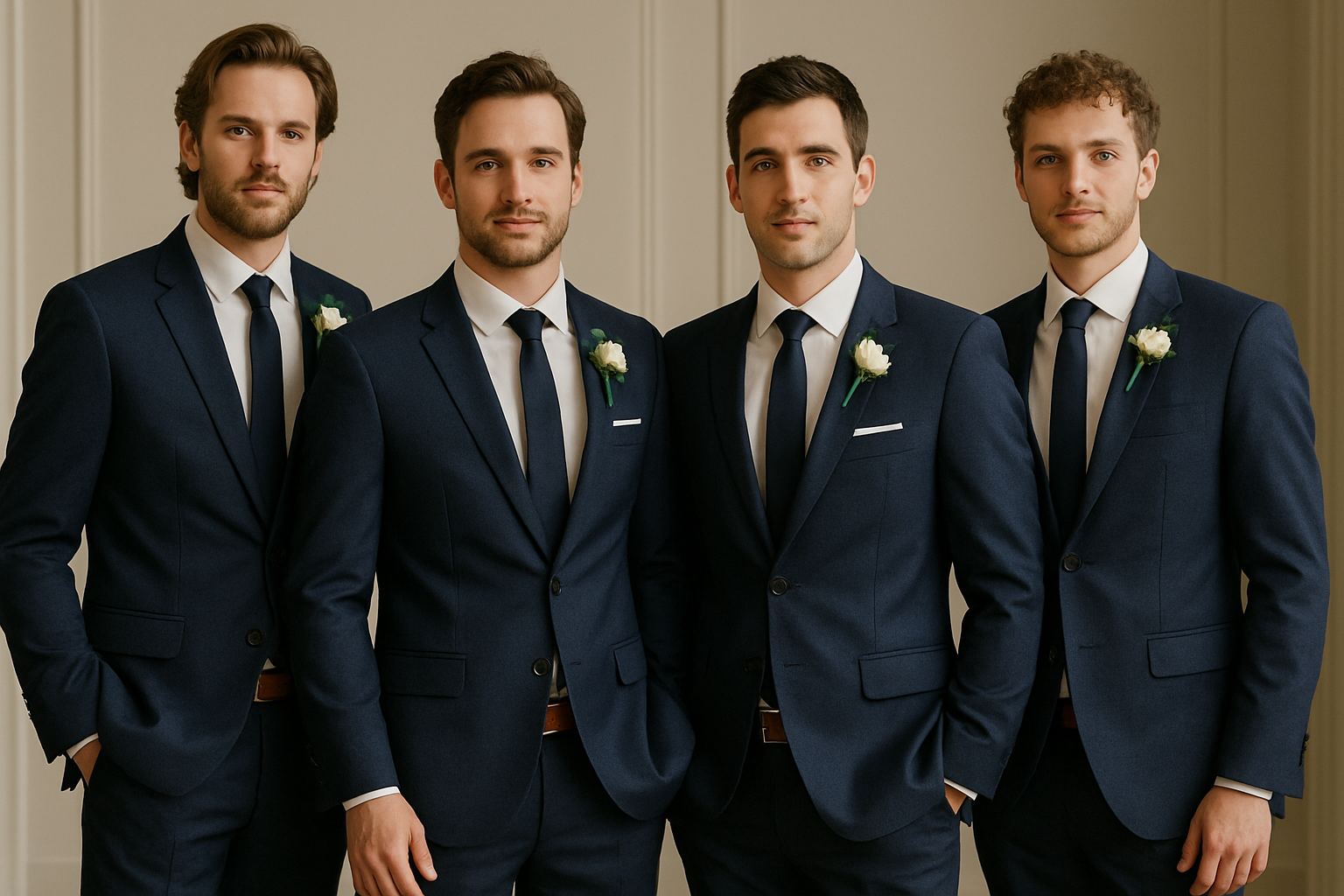
Coordinating your groomsmen’s attire can be challenging, especially when managing different sizes and locations. Our team specializes in group fittings and remote coordination, ensuring a cohesive, polished look for your entire wedding party. We provide flexible options that accommodate individual preferences while maintaining uniformity.
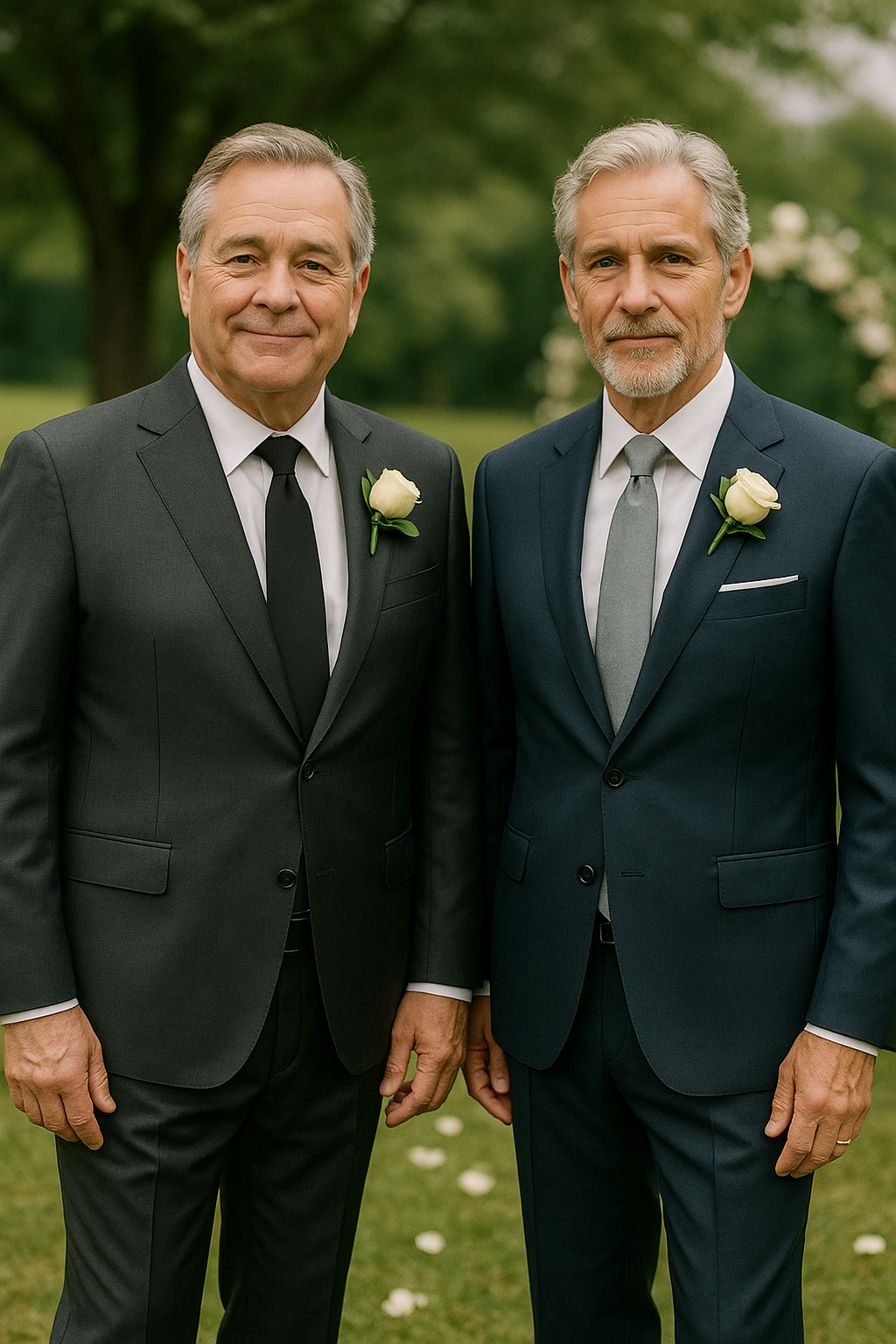
The fathers play an important role in the wedding and deserve attire that balances formality and comfort. To ensure the fathers of the bride and groom wedding attire is impeccable, we offer tailored options that complement the wedding’s dress code and color palette, helping fathers feel distinguished and appropriately dressed for the occasion.
Guests also benefit from our expert guidance and extensive collection. Whether you need help deciphering the dress code or finding a versatile suit for multiple events, our stylists assist in selecting attire that’s stylish, appropriate, and comfortable, ensuring you enjoy the celebration without wardrobe worries.
No matter your role, Family Britches provides stress-free, expert outfitting services designed to make your wedding experience seamless and stylish from start to finish.
The planning process follows a systematic approach that eliminates stress and ensures perfect results. Initial consultations occur six or more months before your wedding, allowing ample time for custom work and group coordination.
Fabric selection and color matching happen early in the process, with swatches and samples provided to ensure perfect coordination with your wedding palette. Our team’s expertise helps navigate seasonal appropriateness and venue suitability.
Multiple fittings are standard for custom garments, with at least two sessions scheduled for optimal results. Final fittings occur 1-2 weeks before your wedding, with in-house alteration services available for last-minute needs.
What has set Family Britches apart over the years is our consultative, highly personalized approach that leverages decades of event outfitting expertise, along with our custom in-house tailoring. Every member of your wedding party receives individual attention while maintaining group cohesion.
Their process ensures perfect coordination even for challenging logistics. Whether dealing with destination weddings, scattered wedding parties, or tight timelines, we accommodate real-world complications while maintaining quality standards.
Our expertise extends beyond basic measurements to style guidance, accessory coordination, and timeline management. We understand that wedding planning involves many moving parts, and our services integrate seamlessly with your overall preparation process.
Success in wedding attire planning requires systematic approach and proper timing. We recommend following this proven timeline for optimal results.
Six Months Before Your Wedding: Set your formalwear tone by confirming the dress code with your wedding plans. This foundational decision affects all subsequent choices and ensures appropriate formality levels.
Five Months Before: Coordinate palette and fabric selections that align with your wedding colors and seasonal climate. This timing allows for fabric ordering and ensures color consistency across your wedding party.
Four Months Before: Schedule initial fittings and place orders for custom pieces. Group coordination begins here, with measurements and style selections for all participants.
Two Months Before: Confirm all details including delivery dates, final measurements, and accessory selections. This checkpoint ensures everything remains on track for your deadline.
Two Weeks Before: Complete final fittings and confirm all garments are ready for your wedding day. Emergency time remains available for any last-minute adjustments needed.
This timeline accommodates the complexities of group coordination while ensuring custom quality and perfect fit for every participant.
Don’t leave your wedding attire to chance. Contact us today to begin planning your perfect wedding look, whether you’re a groom preparing for your big day or a member of the wedding party seeking coordination and style guidance. Your wedding memories deserve nothing less than perfection.
Whether you’re the groom preparing for your big day, a groomsman coordinating with the wedding party, or a guest deciphering the dress code on your invite, choosing the right men’s wedding attire can feel overwhelming. With multiple dress codes, seasonal considerations, and venue requirements to navigate, it’s no wonder many men find themselves stressed about what to wear.
This comprehensive guide will walk you through everything you need to know about men’s wedding attire, from understanding the most formal white tie requirements to nailing the perfect casual wedding look. You’ll discover how to dress appropriately for any wedding dress code, coordinate seamlessly with your wedding party, and avoid common mistakes that could leave you feeling underdressed or out of place.
Let’s dive into the essential knowledge that will ensure you look stylish, appropriate, and confident at any wedding celebration.
Men’s wedding attire encompasses all clothing choices for male participants in a wedding, including the groom, groomsmen, and guests. The foundation of appropriate wedding dressing rests on understanding your role, the specified dress code, the venue, and the season.
Your role significantly impacts your attire choices. The groom typically leads in formality and distinction, often incorporating custom or bespoke elements that set him apart. Groomsmen coordinate with the groom while maintaining a cohesive look that complements the overall wedding theme. Guests aim for elegance without overshadowing the main participants.
Proper wedding attire shows respect for the ceremony and its hosts while maintaining aesthetic harmony in photos. When you dress appropriately, you contribute to the event’s tone and demonstrate consideration for the couple’s vision. Missteps like underdressing for a formal event or wearing overly casual clothes to a church ceremony can stand out negatively and detract from the celebration.
The interplay between dress codes, venues, and seasons creates the framework for your outfit decisions. A beach wedding in summer calls for entirely different fabric and color choices than a winter church ceremony. Understanding these factors helps you select attire that’s both appropriate and comfortable.
Wedding dress codes provide the primary framework for your attire decisions. Each level demands specific attention to detail, with formality descending from white tie through casual. Understanding these popular wedding dress codes ensures you’ll never feel out of place at any celebration.
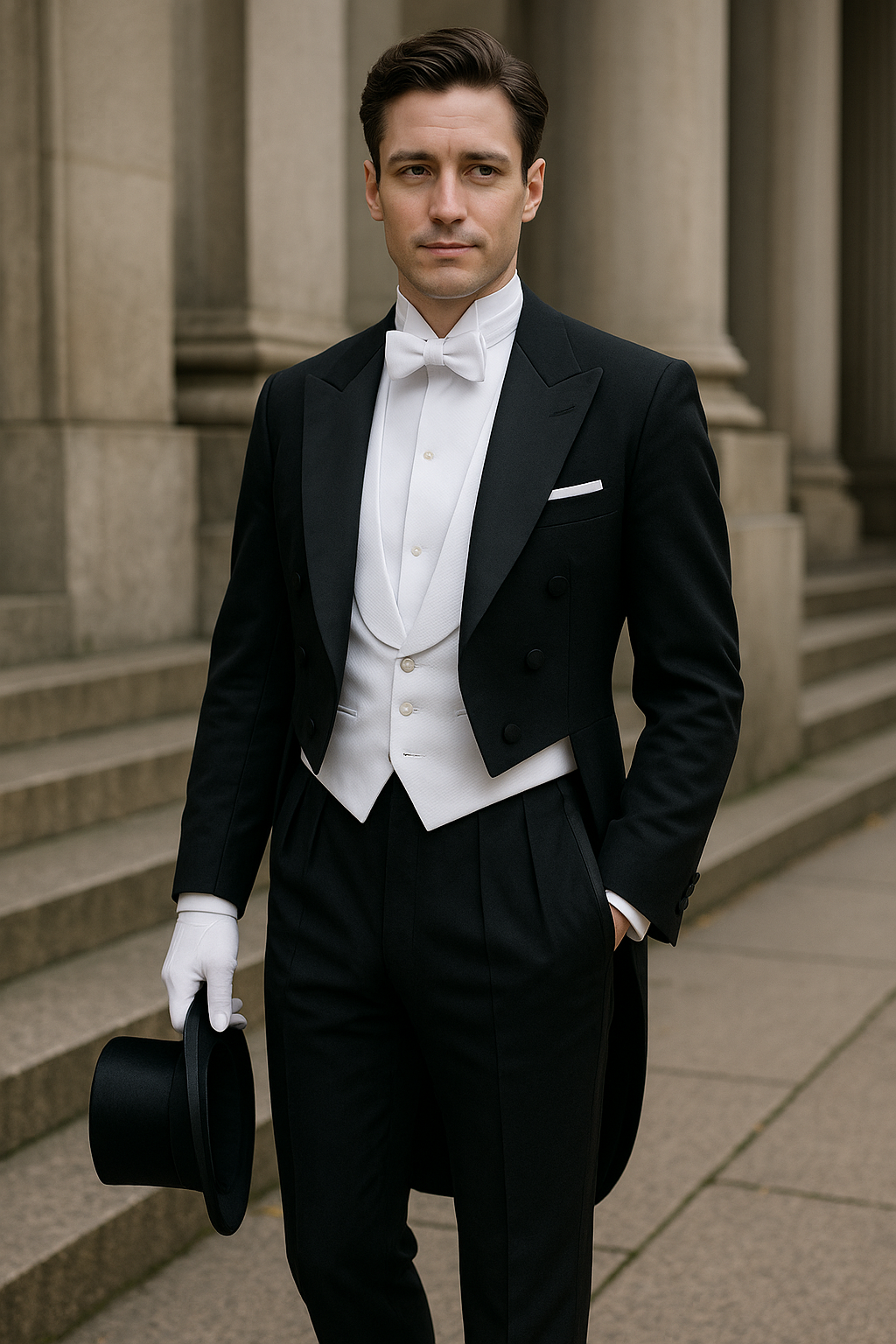
White tie represents the pinnacle of formal dress code, reserved for the most elite occasions. This traditional evening wear requires specific components that cannot be substituted or modified.
Your white tie ensemble must include a black tailcoat with matching high-waisted trousers featuring satin stripes, a white wing-collar shirt, white waistcoat in piqué cotton, and a white bow tie that should be hand-tied. Complete the look with black patent leather shoes, and consider optional accessories like white gloves or a black top hat for extremely formal venues.
The shirt must be starched with a plain front and no chest pocket, designed to accommodate cufflinks and formal studs. This dress code allows minimal personal flair – authentic pieces maintain strict adherence to traditional specifications.
White tie weddings are extremely rare in modern celebrations, typically appearing only at royal or state ceremonies. If you receive such an invitation, plan well in advance as authentic pieces require specialty sourcing from high-end menswear stores or rental establishments.
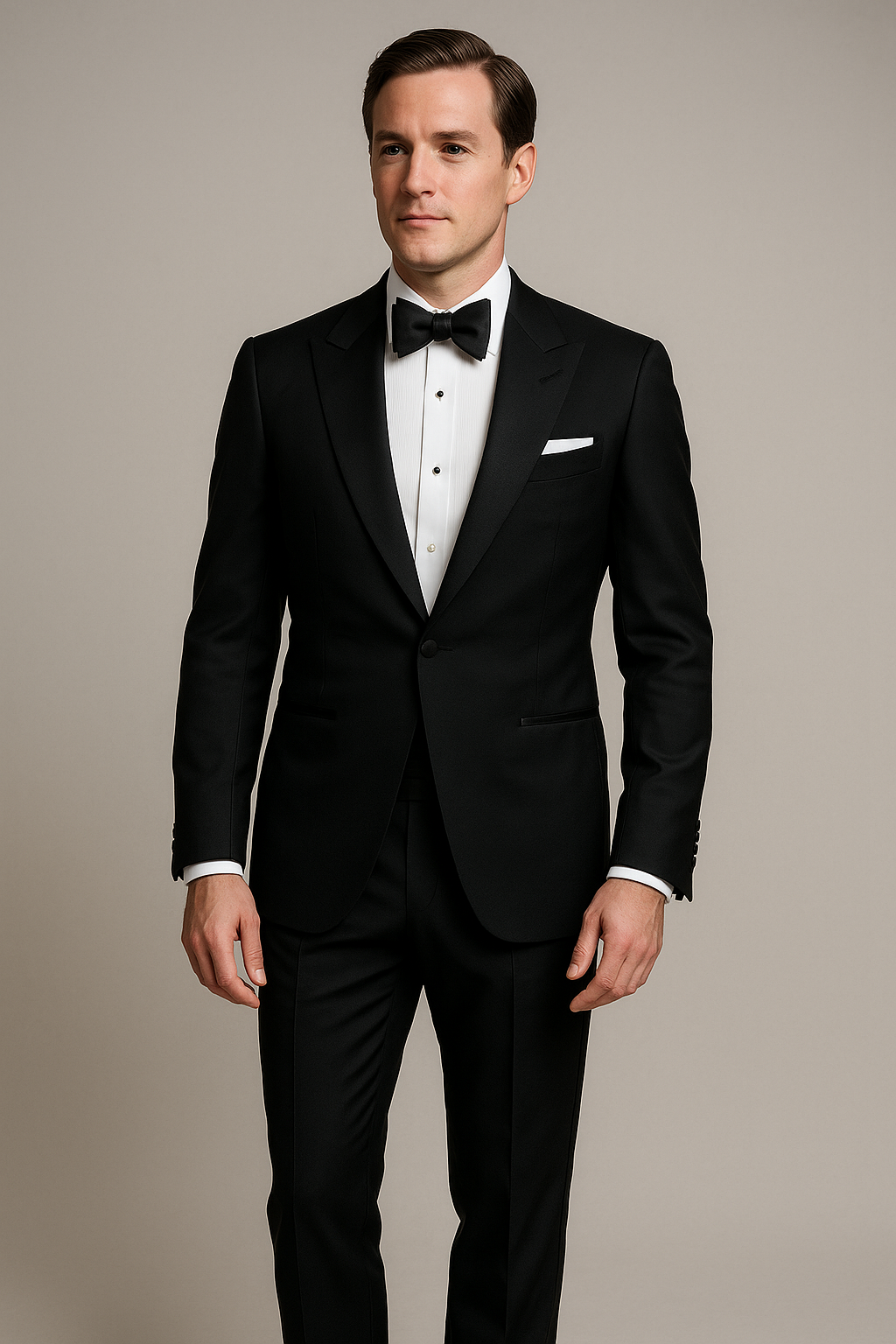
The black tie dress code stands as the gold standard for evening formal weddings. This classic formal dress code requires specific components that create a sophisticated, elegant appearance.
Your black tuxedo should feature a single-breasted jacket with peak or shawl lapels and satin facings. Midnight blue represents an acceptable sophisticated alternative to traditional black. Pair with a white dress shirt featuring a pleated or piqué front and French cuffs designed for cufflinks.
Essential accessories include a black bow tie (self-tied strongly preferred), either a cummerbund or black low-cut waistcoat, and black patent leather or well-shined calfskin shoes. Don’t forget black silk socks, appropriate cufflinks, and often a white pocket square.
Avoid common mistakes like wearing neckties instead of bow ties, substituting business suits, choosing colored shirts, or selecting inappropriate footwear. A properly fitted tuxedo – whether rented or purchased – should be tailored to your measurements for the best appearance.
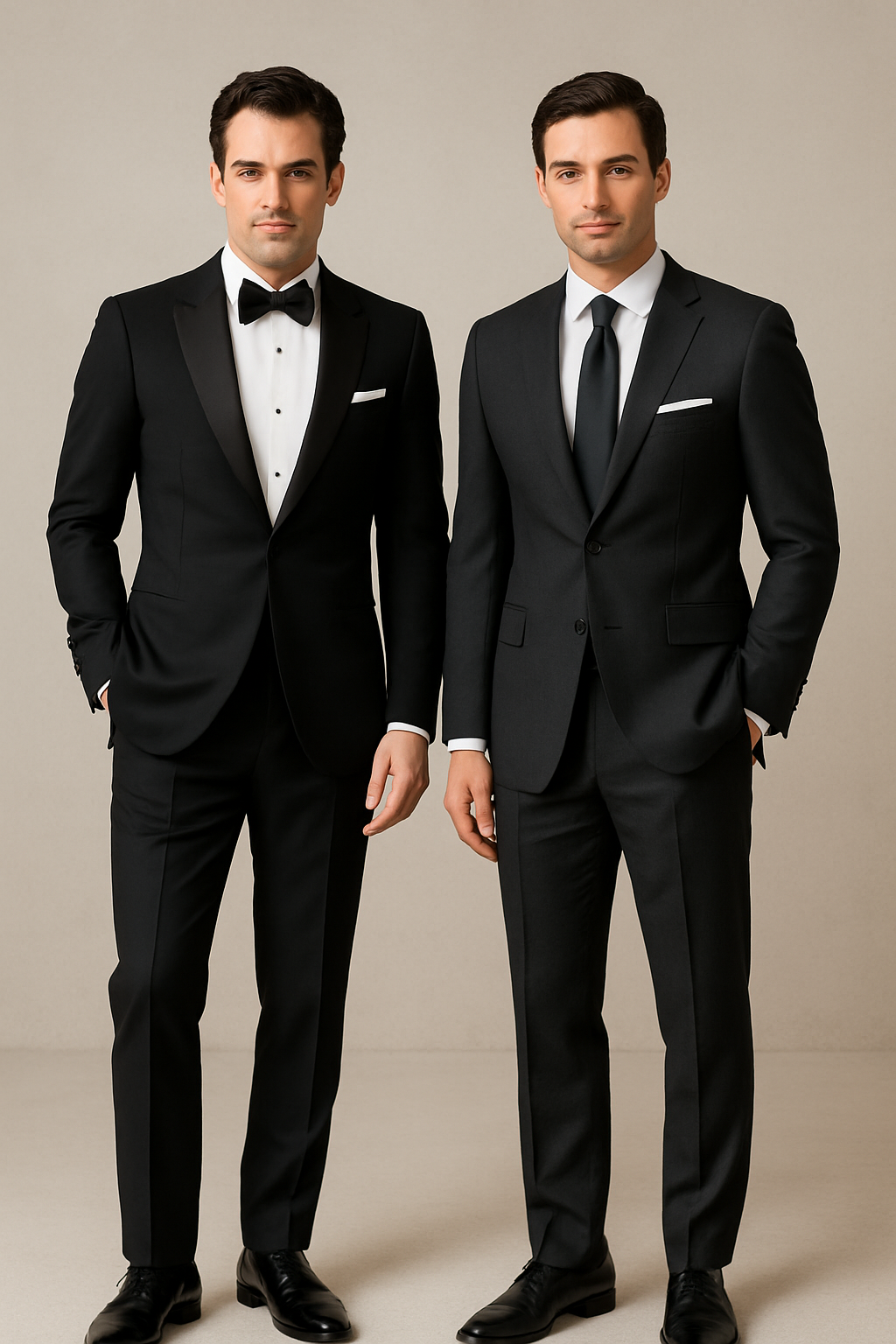
This flexible dress code allows but doesn’t require a tuxedo, giving you options while maintaining elevated formality. Understanding when to choose each option helps you dress appropriately without overdoing it.
You can select a black tuxedo following traditional black tie guidelines, or opt for a dark suit in black, deep navy, or charcoal. When choosing the suit option, pair with a white shirt and either a dark silk tie or bow tie for appropriate formality.
Both bow ties and neckties work with this dress code. Classicism favors bow ties with tuxedos, while neckties pair naturally with suits. Consider the evening timing and venue formality when making your choice.
Midnight blue tuxedos offer a sophisticated alternative that photographs beautifully and maintains traditional elegance. Add formal accessories like cufflinks, a quality dress watch, and silk socks to reinforce the elevated tone.
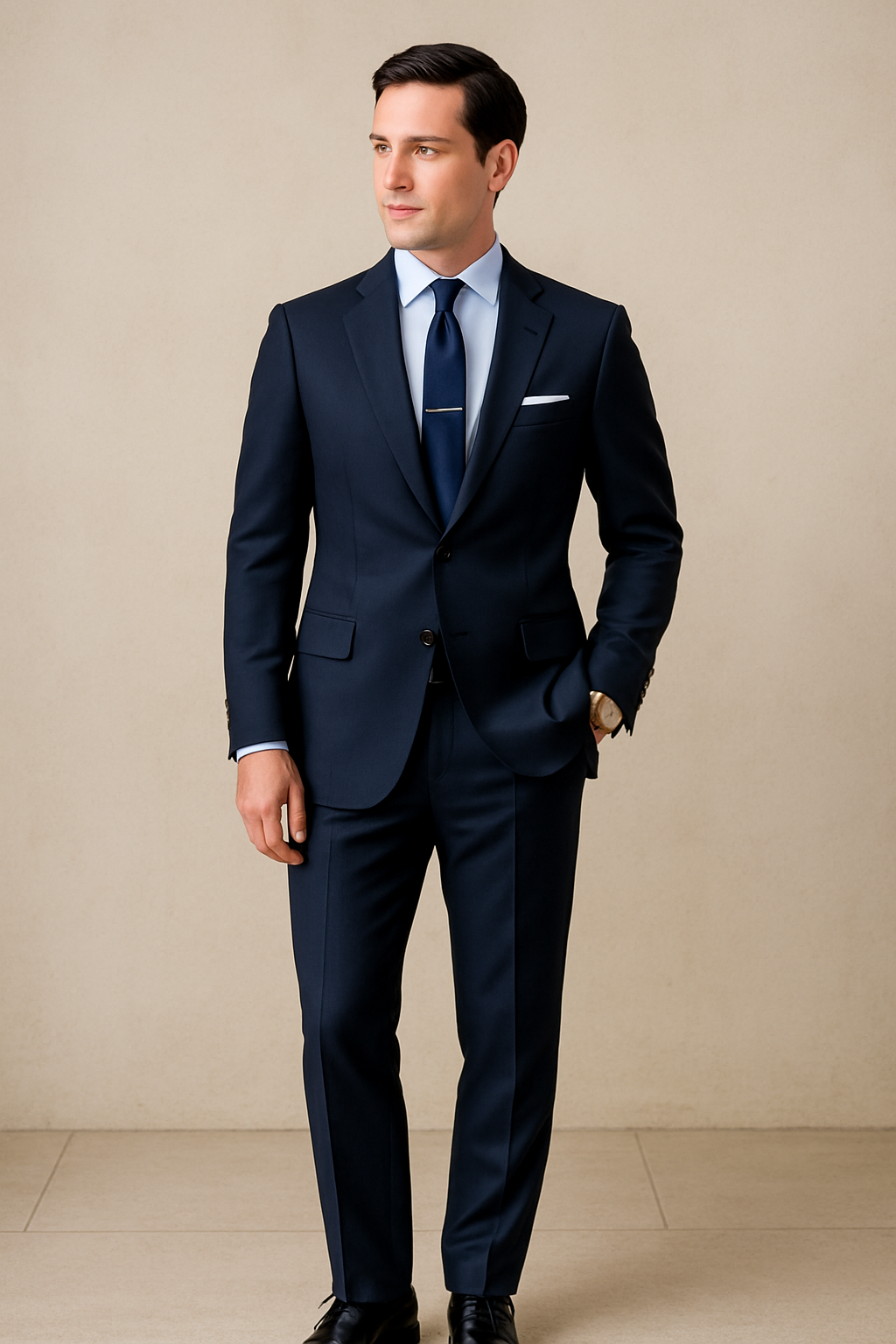
The formal dress code, sometimes called business formal, requires a well-tailored dark suit that demonstrates respect for the occasion while remaining accessible for most wardrobes.
Your foundation should be a navy, charcoal, or black suit with a white or pale blue dress shirt and conservative silk tie. This combination works for most formal weddings and provides versatility for future events.
Quality accessories elevate your look: consider tie bars, cufflinks, a dress watch, and polished dark dress shoes. These details show attention to the occasion’s importance while maintaining appropriate formality levels.
Seasonal adaptations keep you comfortable while maintaining the dress code. Choose lighter wool or tropical-weight fabrics for summer weddings, and heavier wool or flannel for winter celebrations. The key is maintaining the formal appearance while adapting to weather conditions.
Cocktail attire offers more flexibility in color and styling while maintaining polished elegance. This popular dress code allows personal style expression within appropriate boundaries.
A classic suit in mid-to-light gray, blue, or subtle patterns works well, or choose a tailored blazer with well-fitted dress trousers. Shirts may feature lighter colors or subtle patterns, and ties are generally expected but may be omitted for afternoon or summer weddings depending on the venue.
Your color palette expands significantly with cocktail attire. Light blue, tan, or soft prints become acceptable choices. Footwear options include oxfords, loafers, or brogues – always dress-quality and recently polished.
This dress code works particularly well for afternoon celebrations, garden parties, or venues with a relaxed elegant atmosphere. The key is balancing sophistication with approachability.
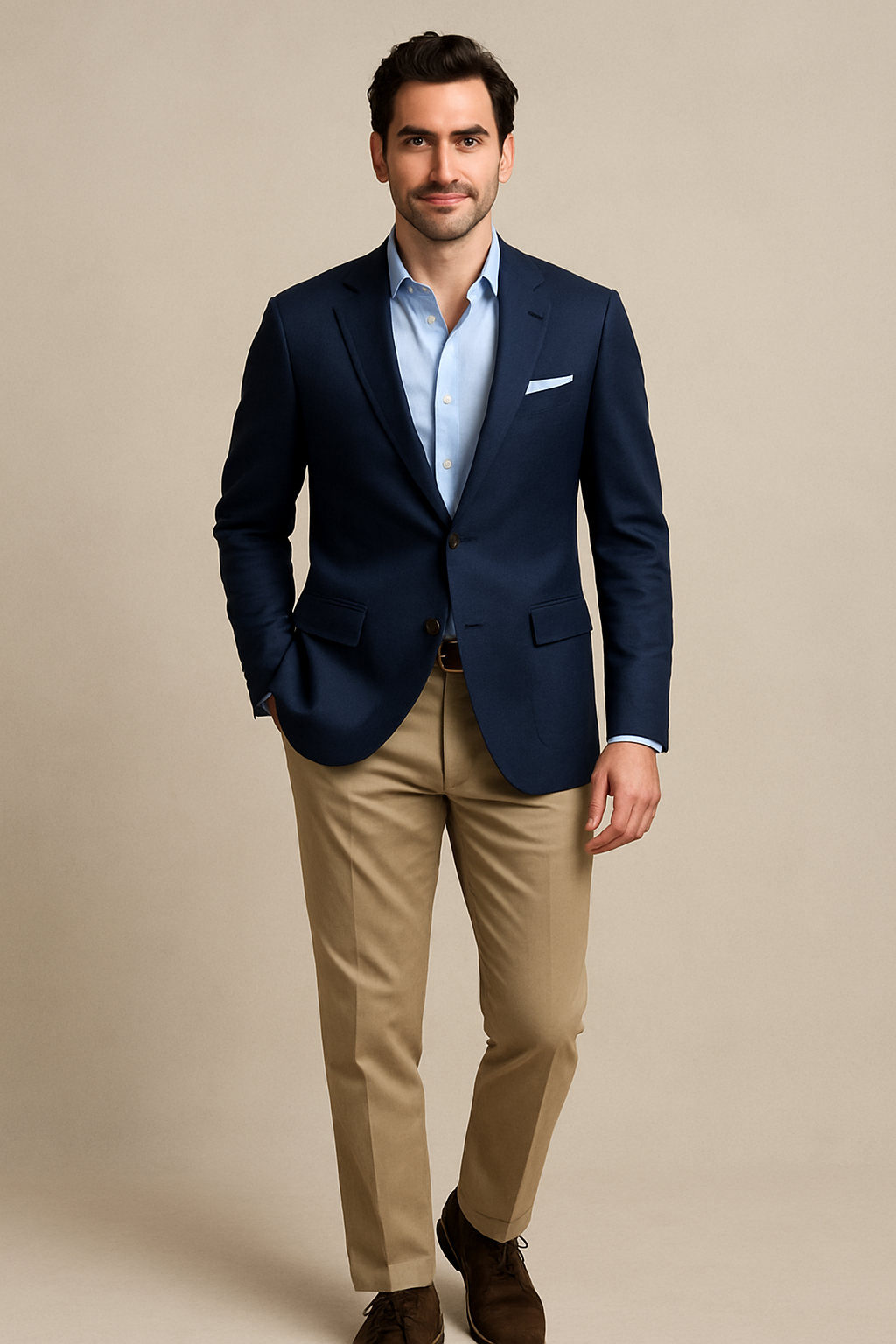
Casual wedding attire emphasizes elevated casual pieces that maintain respect for the occasion while offering comfort and personal style expression.
Focus on crisp, coordinated pieces: a blazer or sport coat paired with trousers or chinos, a dress shirt with optional open collar styling, and smart shoes like loafers or derbies. Avoid jeans, sneakers, t-shirts, shorts, and overly casual items that might appear disrespectful.
Seasonal fabric choices enhance comfort and appropriateness. Lighter cotton or linen works for warm weather, while adding texture through wool blends suits cooler seasons. Accessories like tasteful watches or belts offer subtle elegance without overwhelming the casual aesthetic.
Reserve bold colors and patterns for accessories rather than primary garments. This approach allows personality expression while maintaining appropriate restraint for the wedding setting.
Seasonal considerations significantly impact fabric choices, color palettes, and layering strategies. Proper seasonal dressing ensures comfort while maintaining appropriate formality for the occasion.
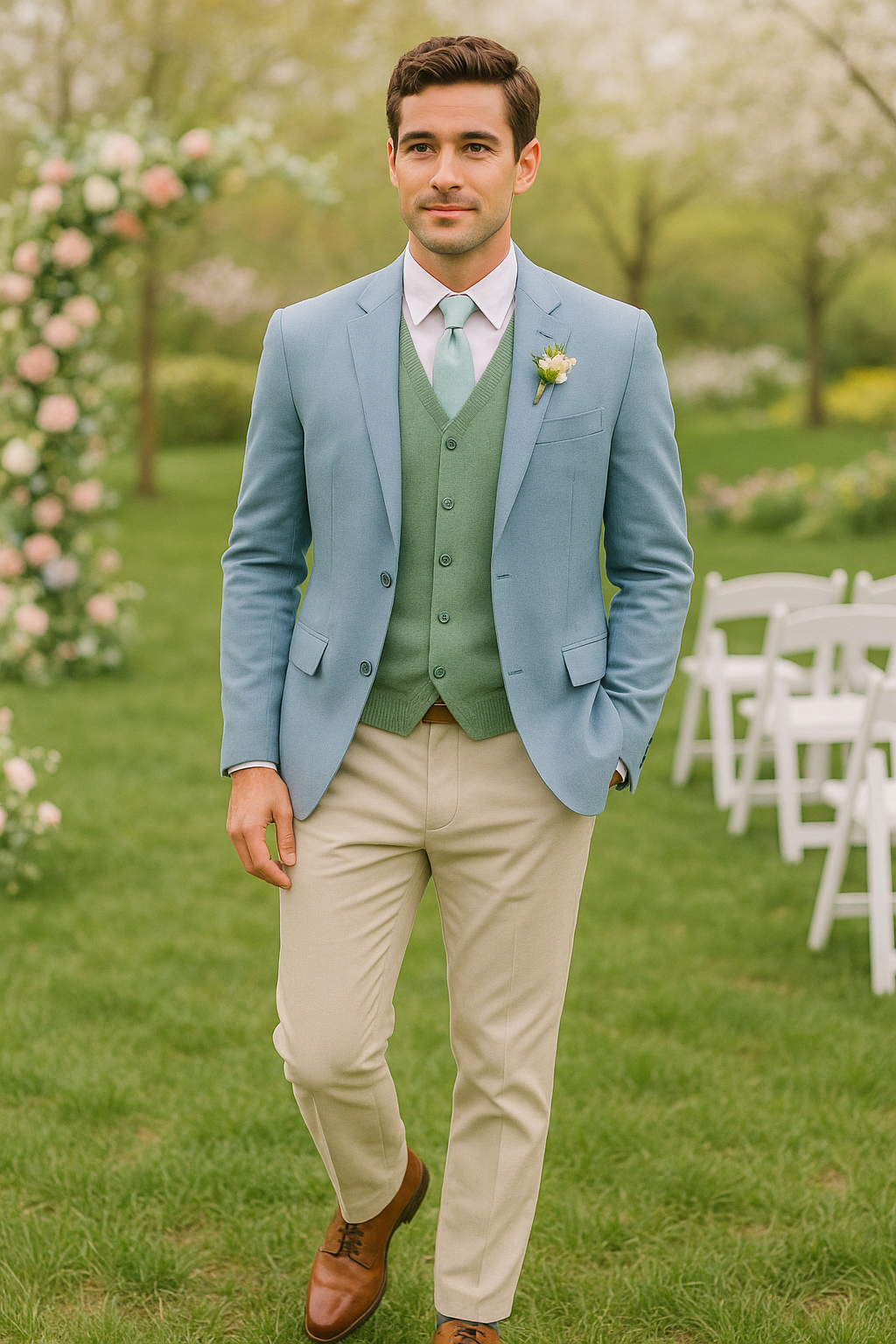
Spring weddings call for adaptable clothing that handles fluctuating temperatures while reflecting the season’s fresh energy. Light wool and cotton fabrics provide versatility for unpredictable spring weather.
Your color palette should embrace spring’s renewal with pastels, light blues, and fresh greens. These colors photograph beautifully against spring backdrops and complement typical floral arrangements and décor choices.
Layering strategies become essential for spring’s temperature variations. Consider vests, lightweight sweaters under jackets, or blazers that can be removed as temperatures rise. This flexibility keeps you comfortable throughout ceremonies and receptions.
Choose footwear suitable for potentially damp grounds, avoiding suede that might be damaged by spring moisture. Leather dress shoes or other weather-resistant options work best for outdoor spring venues.
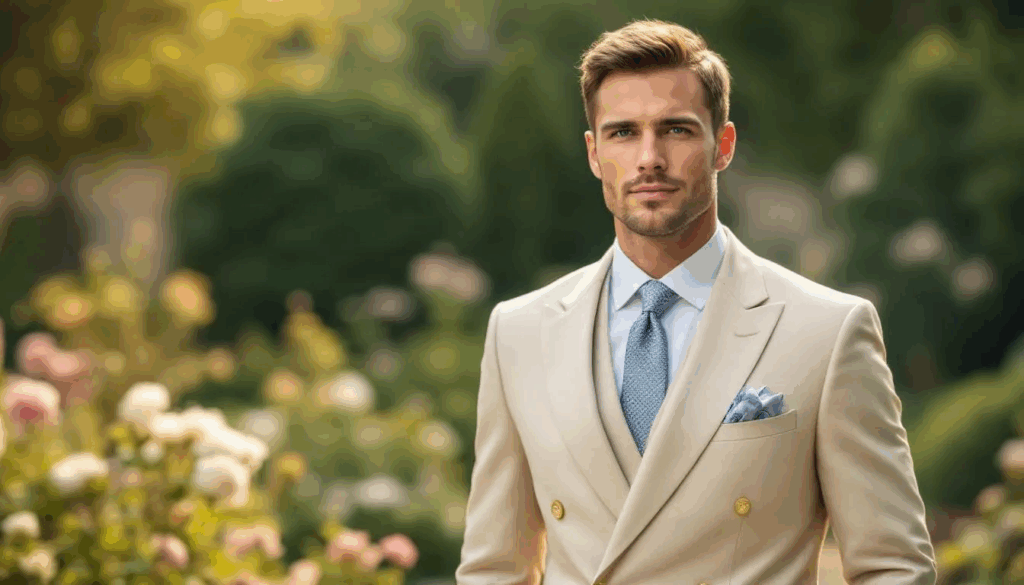
Summer wedding attire prioritizes breathable fabrics and heat management while maintaining appropriate formality. Linen, lightweight wool, cotton blends, and seersucker become your best fabric choices.
Light color schemes work both practically and aesthetically for summer celebrations. Beige, light gray, pale blue, and even soft pink help reflect heat while creating fresh, seasonal appearances that complement summer venues and décor.
Consider practical summer adaptations like open-collar styling for less formal events, “no-sock” looks with loafers for beach venues, and lightweight accessories. Sun protection through quality sunglasses or panama hats can be both practical and stylish for outdoor celebrations.
Breathability becomes paramount for comfort during long summer celebrations. Choose unlined jackets when possible, and prioritize natural fibers that allow air circulation.

Fall weddings embrace richer colors and heavier fabrics that reflect the season’s warmth and sophistication. Burgundy, forest green, deep navy, and burnt orange create stunning autumn palettes.
Fabric choices shift toward wool and tweed that provide warmth and visual richness. These materials photograph beautifully against fall foliage and complement typical autumn wedding décor elements.
Layering becomes more pronounced with vests, textured blazers, and coordinated accessories. Brown leather accessories and earth-toned palettes pair naturally with fall color schemes and venues.
Suede shoes become seasonally appropriate and add textural interest to your ensemble. This fabric choice works particularly well for outdoor fall venues and rustic celebration themes.
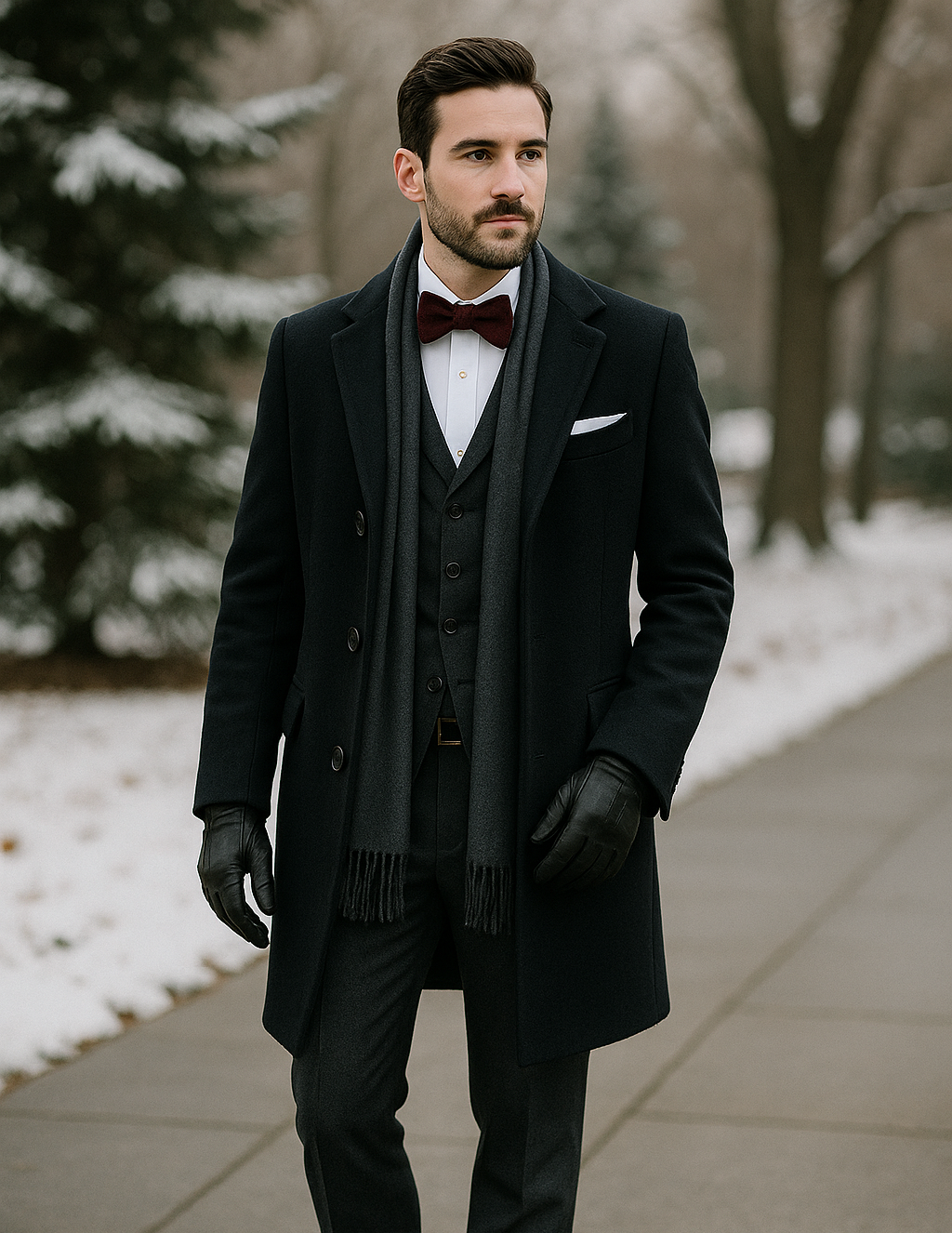
Winter formal fabrics dominate cold-weather weddings: thick wool, flannel, and velvet for special occasions. These materials provide necessary warmth while maintaining formal elegance.
Dark colors take precedence in winter wedding attire – black, midnight blue, charcoal, and deep jewel tones like emerald or burgundy. For holiday weddings, subtle seasonal elements like velvet bow ties or tartan accessories add festive touches.
Cold weather layering requires coordination with your main ensemble. Overcoats, scarves, and gloves should complement rather than clash with your formal attire. Quality outerwear becomes an investment piece for multiple winter events.
Holiday wedding considerations might include slightly more festive elements, but always maintain respect for the occasion’s formality level. Subtle seasonal touches work better than obvious holiday themes.
Wedding venues significantly influence appropriate attire choices, from fabric selection to practical footwear considerations. Understanding venue-specific requirements ensures both comfort and appropriateness.
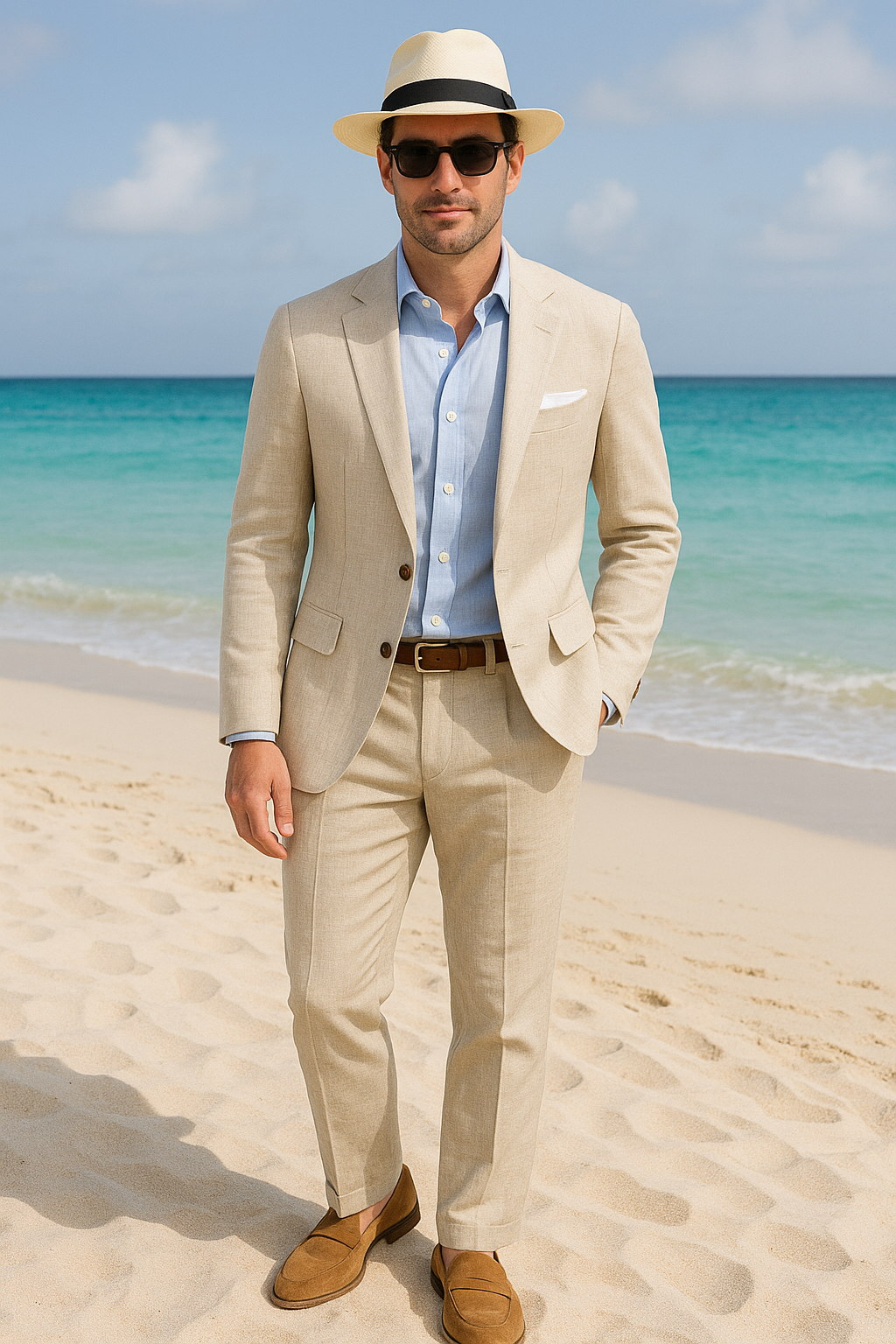
Beach wedding attire prioritizes lightweight, breathable fabrics suitable for sand and sun exposure. Linen and cotton suits in tan, beige, pale gray, or blue work best for seaside celebrations.
Unlined jackets provide necessary cooling, and jackets may be omitted entirely for extremely casual beach ceremonies. Focus on comfort and breathability while maintaining respect for the celebration.
Footwear requires special consideration for sand conditions. Loafers work well, and some beach weddings permit formal sandals if explicitly allowed. Avoid shoes that might be damaged by sand or salt water.
Sun protection becomes both practical and stylish. Quality sunglasses, panama hats, or linen pocket squares can serve dual purposes while enhancing your beach-appropriate ensemble.
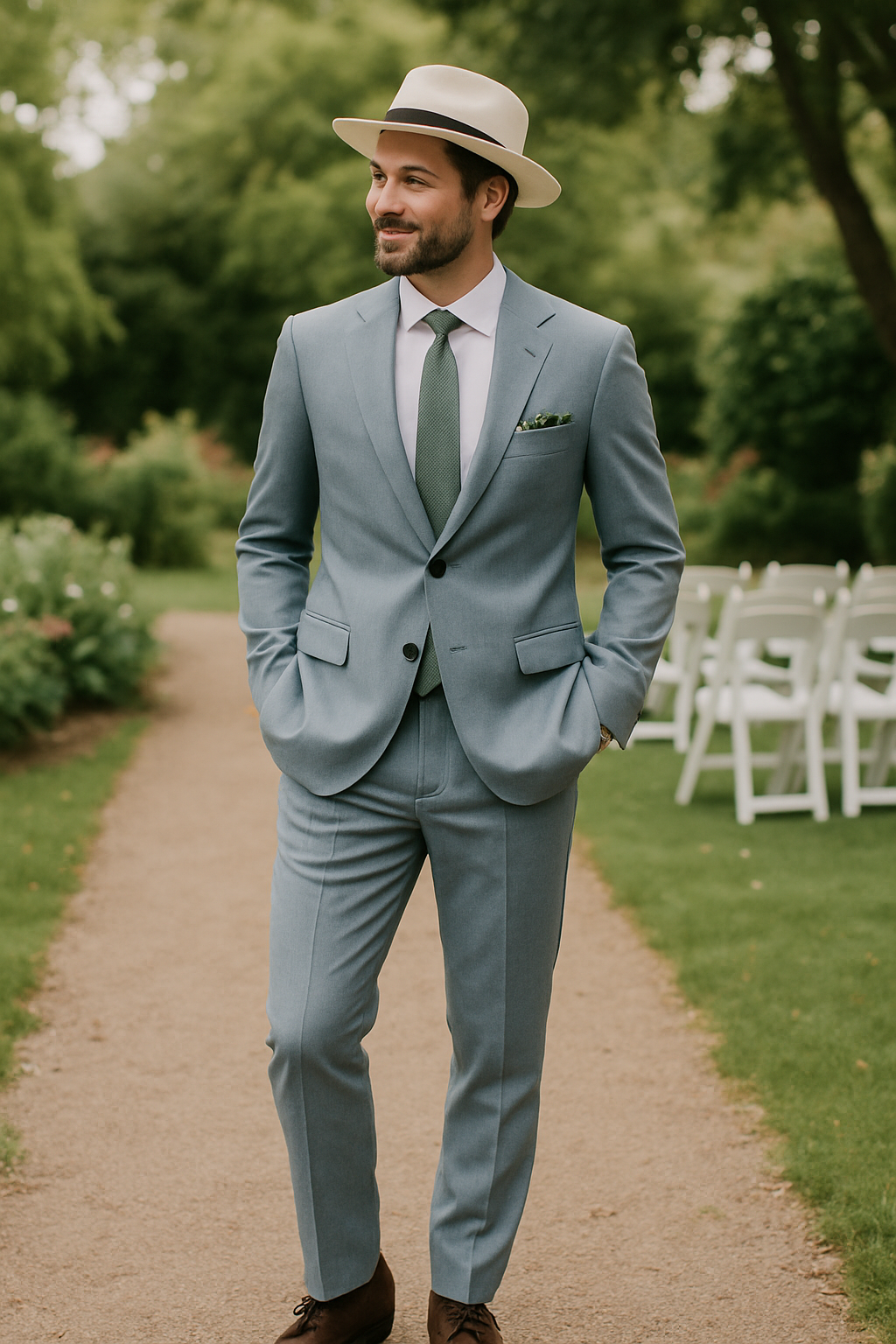
Nature-inspired color palettes complement outdoor settings beautifully. Soft blues, grays, and greens blend harmoniously with garden backdrops and natural lighting.
Practical considerations include footwear suitable for grass and potentially uneven terrain. Avoid shoes that might sink into soft ground or be damaged by outdoor conditions.
Weather backup planning becomes essential for outdoor celebrations. Consider layering options and weather-resistant accessories that maintain style while providing protection.
Floral or botanical patterns in ties or pocket squares can add thematic touches that complement garden settings without overwhelming your ensemble.
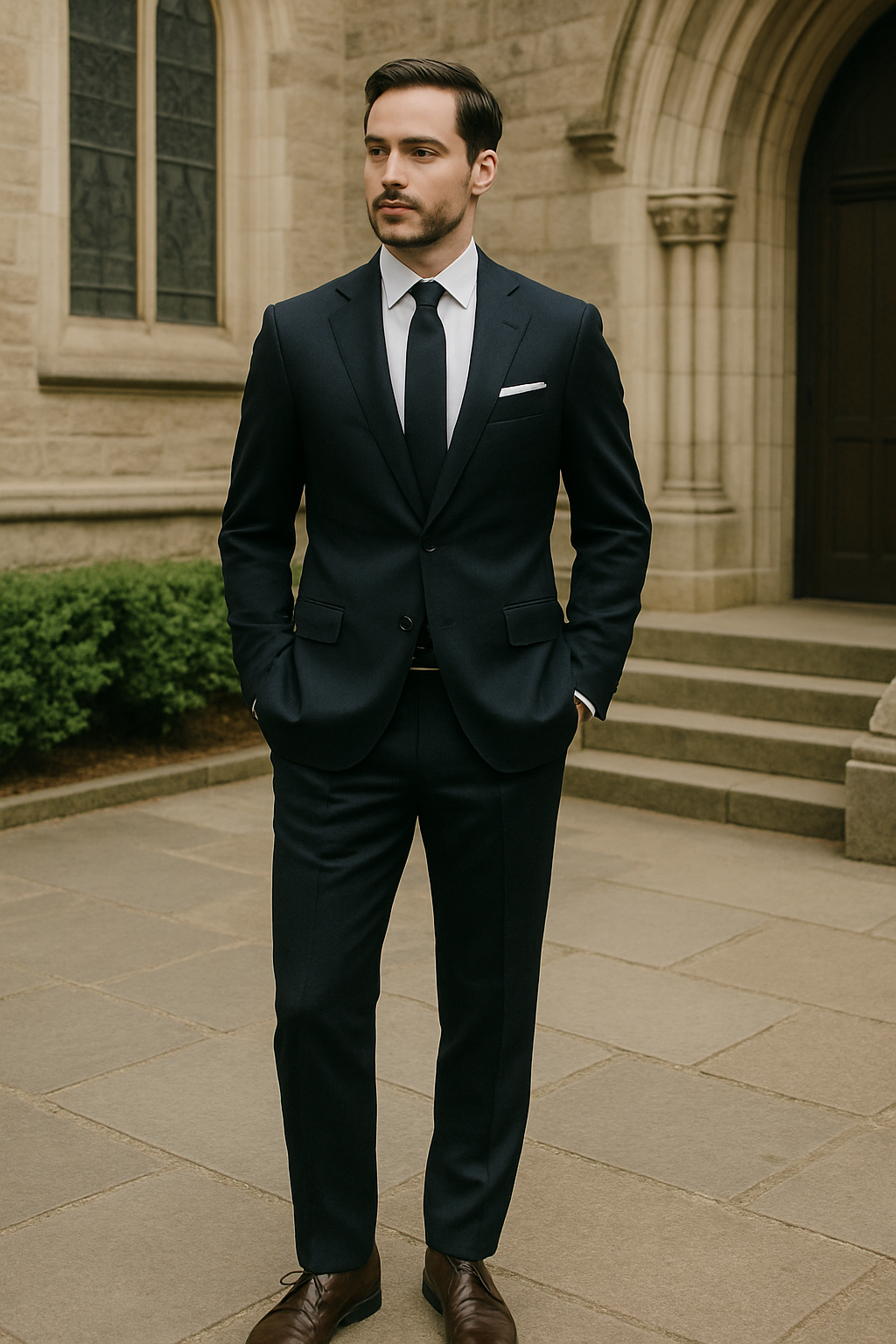
Conservative formal wear shows appropriate respect for religious and traditional settings. Dark suits or tuxedos with muted shirts and classic accessories work best.
Traditional color choices – black, navy, charcoal – demonstrate respect for sacred spaces and formal traditions. Avoid bold colors or patterns that might seem inappropriate in religious settings.
Cultural and religious considerations may require additional modesty, such as covered arms or specific color requirements. Research or ask about any special requirements when attending unfamiliar traditions.
Classic leather dress shoes in black or brown complete traditional venue attire appropriately. Polish and quality matter significantly in formal religious settings.
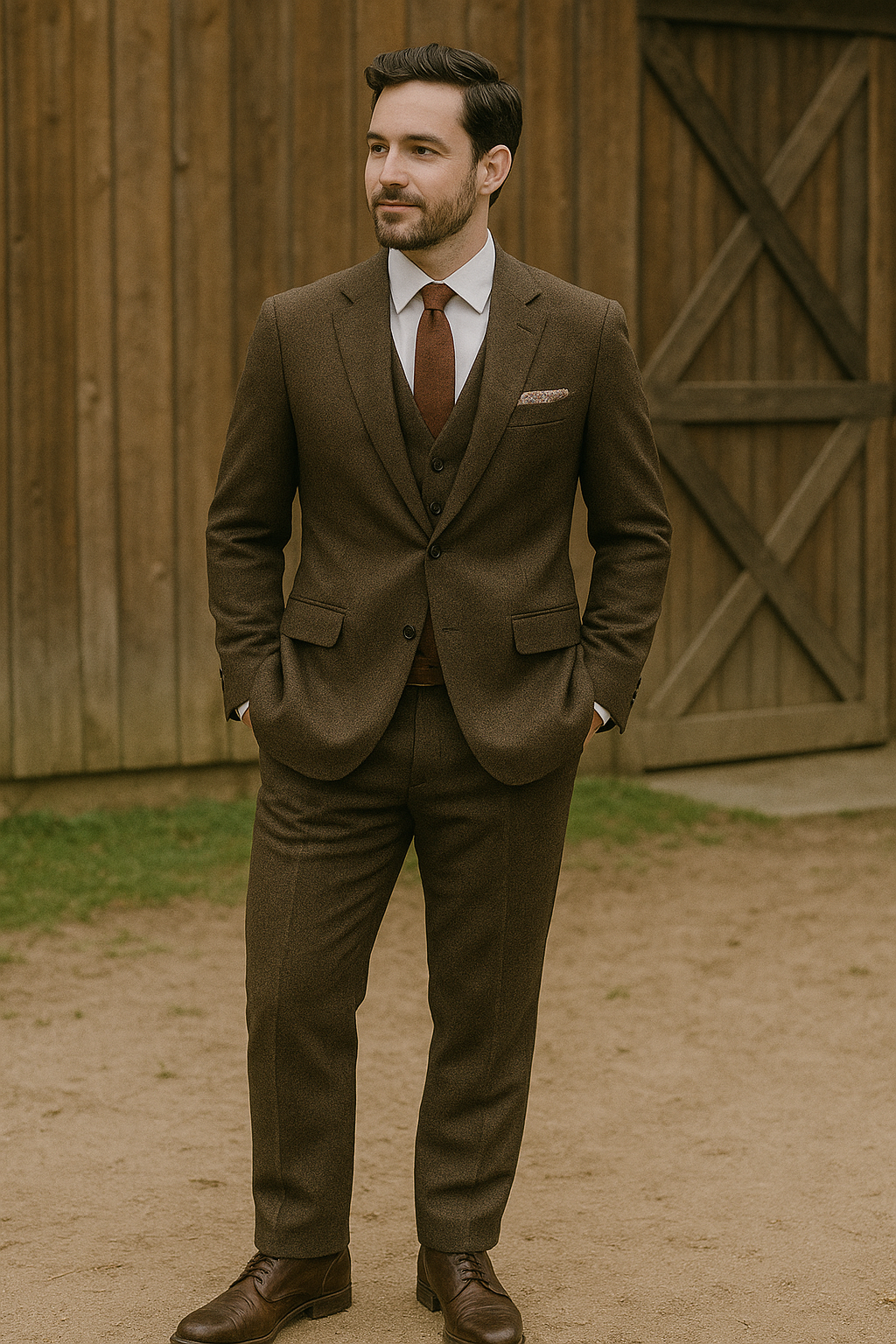
Earthy tones and natural textures complement rustic venues perfectly. Brown, olive, rust, and tan create cohesive looks that match barn and country settings.
Textured fabrics like tweed, brushed flannel, or heavyweight cotton add visual interest while matching rustic themes. These materials photograph beautifully against wood and natural backdrops.
Layering with vests or casual waistcoats enhances the rustic aesthetic while providing warmth in barn venues. Brown leather accessories often work better than black for these settings.
Some rustic weddings accept well-polished boots instead of traditional dress shoes. Confirm this option with hosts, as footwear expectations vary significantly between rustic venues.
As the groom, your attire sets the tone for the entire wedding party while expressing your personal style. The selection process involves balancing distinction with coordination, formality with comfort.
The decision between a tuxedo and suit depends on your wedding’s formality, venue, and personal preferences. Evening formal weddings typically call for tuxedos, while afternoon or casual venues may suit dark suits better.
Coordination with your wedding theme and venue ensures photographic harmony and appropriate formality levels. Your choice should complement both the bridal party’s attire and the overall celebration aesthetic.
Standing out while complementing the rest of the wedding party requires careful consideration. Special ties, unique pocket squares, or distinctive boutonnieres can distinguish you while maintaining group cohesion.
Custom versus off-the-rack considerations involve timeline, budget, and fit preferences. Custom pieces offer superior fit and personalization but require 3-6 months lead time. Quality off-the-rack options can work with professional alterations.
Essential accessories elevate your look and provide opportunities for personalization. Quality ties, pocket squares, cufflinks, and watches should coordinate with your overall color scheme while reflecting your style.
Personalizing your look with meaningful details creates lasting memories and photo opportunities. Family heirloom cufflinks, custom pocket squares featuring wedding date embroidery, or ties in meaningful colors add special touches.
Coordinating metals throughout your accessories creates visual harmony. If you choose silver cufflinks, match with a silver watch and silver tie bar for cohesive elegance.
Special touches like meaningful boutonnieres or family heirloom accessories connect your attire to your personal story while maintaining appropriate formality for the occasion.
Begin planning custom pieces at least 6 months before your wedding date. This timeline allows for proper measurements, fabric selection, and multiple fittings without rushing the process.
Schedule multiple fitting appointments throughout the process. Initial measurements should occur 4-6 months prior, with follow-up fittings at 2-3 months and final fittings 1-2 weeks before the wedding.
Final fittings 1-2 weeks before your wedding allow for last-minute adjustments while providing time for any necessary corrections. Your body may change during wedding planning, making final adjustments important.
Emergency backup plans should include contact information for reliable tailors and backup attire options. Last-minute issues can arise, and preparation prevents stress on your big day.
Coordinating groomsmen attire requires balancing group cohesion with individual comfort and budget considerations. Successful coordination creates stunning photos while ensuring everyone feels confident and appropriate.
Two primary approaches work for groomsmen coordination:
Your choice depends on wedding formality and desired aesthetic.
Color coordination with your wedding palette ensures photographic harmony and design cohesion. Consider how groomsmen attire will appear alongside bridesmaids, décor, and venue colors.
Accommodating different body types and budgets requires flexible planning. Rental options, tiered accessory choices, or separates rather than full suits can help include everyone comfortably.
Group ordering through single vendors ensures color consistency and may provide discounts. Early attention to sizing and delivery timelines prevents last-minute complications.
Uniform accessories like matching ties, pocket squares, or socks create group cohesion while allowing subtle personalization through fit and styling choices.
Individual personalization options might include unique boutonnieres, personalized cufflinks, or meaningful watch choices. These touches allow personality expression within group coordination.
Gift coordination provides opportunities to thank your groomsmen while ensuring accessory consistency. Common gifts include cufflinks, watches, tie bars, or quality socks that become part of their wedding attire.
Photo-ready styling tips include ensuring consistent pocket square folds, coordinated tie lengths, and proper lapel pin placement for stunning group photos.
As a wedding guest, your goal is looking appropriate and elegant without overshadowing the main participants. Understanding invitation cues and dress code expectations ensures you contribute positively to the celebration.
Invitation wording, typography, and paper quality provide formality indicators. Formal language and high-quality materials typically signal more formal attire expectations.
When no dress code is specified, use venue and timing cues. Evening hotel receptions suggest formal attire, while afternoon backyard celebrations typically call for semi-formal or cocktail attire.
Venue research helps determine appropriate formality levels. Church weddings typically require conservative formal wear, while beach celebrations call for lighter, more relaxed elegant attire.
Contact the couple or other guests for clarification when invitation cues remain unclear. It’s better to ask than arrive inappropriately dressed for the occasion.
Avoid wearing white, ivory, or any colors that might resemble the bride’s wedding dress. These colors are reserved for the bride and wearing them can appear disrespectful or attention-seeking.
Stick to the prescribed formality level, erring toward overdressing when uncertain. It’s generally better to be slightly more formal than underdressed for important celebrations.
Regional and cultural considerations may require additional research, especially for traditions unfamiliar to you. Religious ceremonies often have specific modesty or color requirements.
Age-appropriate styling ensures comfort and appropriateness for your life stage. Classic, timeless choices typically work better than trendy options for formal celebrations.
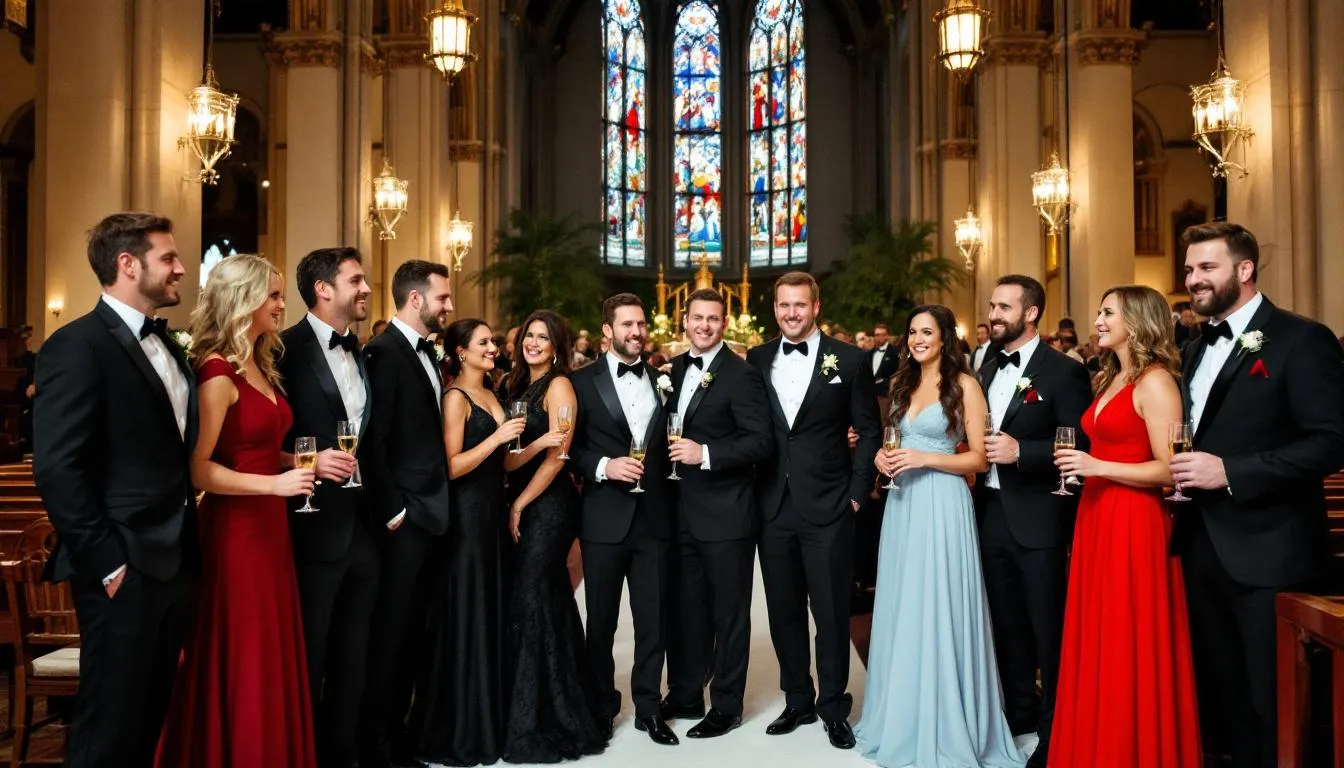
Smart shopping strategies help you build a wedding-ready wardrobe while managing costs and ensuring quality. Understanding your options and priorities guides effective decisions.
Cost comparisons vary significantly based on usage frequency and quality preferences. Purchasing suits ranges from $500-$3000, while rentals typically cost $150-300 for limited duration use.
Quality and fit differences favor purchasing for important occasions. Owned garments can be tailored perfectly and provide superior fabric quality compared to rental options.
Timeline considerations affect your options. Rentals work for last-minute needs, while purchases require time for alterations and custom work.
Long-term wardrobe investment value favors purchasing classic pieces you’ll wear repeatedly. A well-fitted navy or charcoal suit serves multiple formal occasions beyond weddings.
Must-have suits include navy, charcoal, and black options that cover most formal occasions. These colors provide versatility for multiple events and venues.
Versatile accessories for multiple events include quality silk ties, pocket squares, cufflinks, and leather dress shoes. These pieces adapt single suits for various formality levels.
Quality dress shoes in black and brown leather provide foundation pieces for formal wardrobes. Well-maintained leather shoes last years and improve with proper care.
Building a wedding-ready wardrobe on a budget requires prioritizing versatile, quality pieces over trendy options. Classic styles provide long-term value and repeated use opportunities.
Key fit points include shoulders (which can’t be altered significantly), chest measurement, sleeve length, and trouser break. Proper attention to these areas ensures polished appearance.
Invest in alterations for owned garments to achieve perfect fit. Professional tailoring transforms average pieces into exceptional formal wear.
Finding a reliable tailor requires research and referrals. Quality tailors provide valuable long-term relationships for all formal wear needs.
Timeline for tailoring appointments should allow 2-3 weeks for basic alterations and up to 2 months for extensive modifications. Plan accordingly for event deadlines
Understanding frequent errors helps you avoid common pitfalls that can diminish your appearance or cause discomfort during important celebrations.
Quick fixes and prevention strategies include bringing essential tools like lint rollers and sewing kits, securing backup accessories, and confirming details well in advance of events.
Mastering men’s wedding attire doesn’t have to be complicated when you understand the fundamental principles and have expert guidance. From deciphering dress codes to coordinating with your wedding party, proper planning and attention to detail ensure you’ll look confident and appropriate for any wedding celebration.
Remember that great wedding attire starts with understanding your role, respecting the dress code, and choosing quality pieces that fit properly. Whether you’re investing in custom pieces or working with rental options, the key is planning ahead and seeking expert advice when needed.
Family Britches stands ready to help you navigate every aspect of men’s wedding attire, from initial planning through final fittings. Our personalized approach, expert coordination services, and commitment to perfection ensure your wedding attire will be everything you envision and more.
A tuxedo is typically reserved for more formal events such as black tie or white tie weddings and features satin or grosgrain lapels and stripes on the trousers. A suit is more versatile and appropriate for less formal dress codes like cocktail or casual weddings
Yes, wearing a tie is encouraged for black tie optional weddings if you opt for a suit instead of a tuxedo. Bow ties are classic with tuxedos, while neckties pair well with suits.
Bold colors can be a fun way to express personal style, especially in cocktail or semi-formal dress codes. However, for formal or black tie events, it’s best to stick to classic colors like black, navy, or charcoal.
Casual wedding attire typically means a blazer or sport coat paired with dress trousers or chinos, a dress shirt, and smart shoes. Jeans and sneakers are generally not appropriate.
It’s best to start planning six months before your wedding to allow time for fabric selection, custom tailoring, group coordination, and multiple fittings.
Yes, groomsmen can wear complementary suits or varied shades within a unified color palette to balance individual comfort and group cohesion.
Wearing white is traditionally reserved for the bride. Guests should avoid white suits or dresses but can wear white shirts as part of their outfit.
Quality ties, pocket squares, cufflinks, watches, and boutonnieres are excellent ways to add personal style without overshadowing the wedding party.
Venues like beaches call for lighter fabrics and colors, while church or traditional venues often require more conservative and formal attire.
Choose fabrics and colors appropriate to the season—lightweight linens and cottons for summer, wool and velvet for winter—and layer accordingly for comfort.
Expert bar mitzvah attire and outfitting services for over 50 years. Ensure the perfect fit and style for this most special occasion.
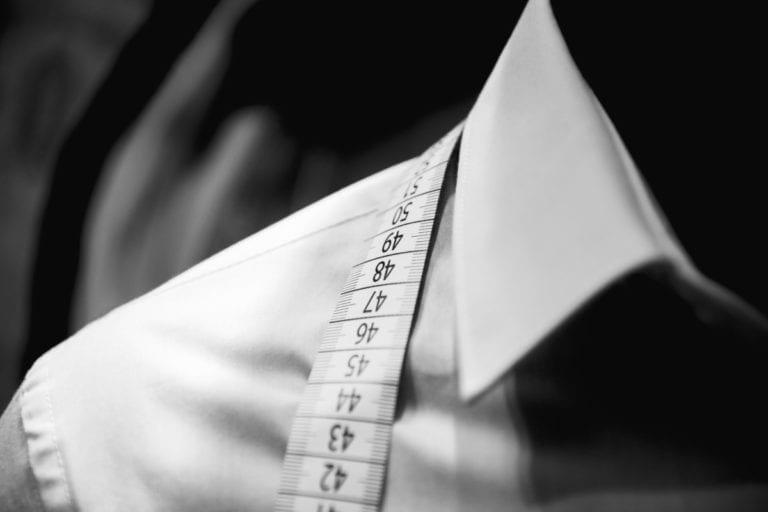
Make a lasting impression with custom tailored clothing by the old world craftsmen at Family Britches. From designer men’s suits to sport coats to slacks, our exceptional men’s custom tailors deliver the best fit you have ever enjoyed.
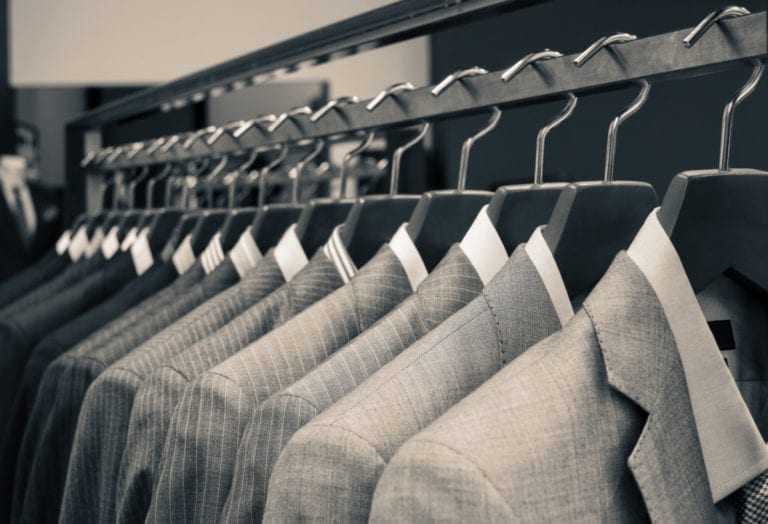
Set up a wardrobe consultation with our personal virtual stylists either in store or from your home. We will suggest coordinated wardrobe selections to complement your individual style preferences and help take the frustration and guesswork out of your closet.